ABB Distributed Control Systems
Etiketler

Factory Robots: What They Can't Do (Yet) and How to Make Them Better

May 09,2025

Factory Robots: What They Can't Do (Yet) and How to Make Them Better


Almost all factories today use robots, from making cars to plastics and medical tools. Robots help factories a lot and are making "smart factories" in the future possible. But, companies need to think about what robots can't do when they choose which robots to use.

Experts think that the market for factory robots will become very big by 2028. This is because more companies want to use machines to do work automatically. When companies see how robots can help them, it's also important to know what problems robots have.

In this article, we will talk about three main problems with factory robots: how much they cost, how safe they are, and how hard it can be to teach people to work with them. Understanding these problems will help us see how companies can make things better.


1) How Much Factory Robots Cost

Buying factory robots often costs a lot of money at first. This includes buying the robot and paying for someone to put it in place and set it up. Also, companies need to pay to keep the robots working. How much this costs depends on how complex the robot is and how much it is used. Over time, these costs can become a big part of how much the robot costs in total.

Also, robots often need extra parts, like special tools for their arms or special sensors. These extra parts can make the cost even higher.

The robot industry is always changing, with newer and better robots coming out all the time. For some companies, especially small ones, it can be hard to keep buying new robots. They might risk losing all their money trying to keep up with the latest technology.


Can Robots Be Affordable?

Even though they cost a lot at first, factory robots can help companies save money in other ways. They can make making things cheaper and help companies earn more money by making work better. If a company plans carefully how to buy robots and manage their money, the robots will probably start saving them money quickly.

Another way to save money is to buy robots that have been used before and fixed up (reconditioned robots). These robots can work almost as well as new ones but cost much less.


2) How Safe are Factory Robots?

People have always thought that factory robots could be dangerous in factories. And there is a good reason for this – they are big, strong machines that can move very fast.

Older robots didn't even have the ability to feel if a person was close. This made them likely to hit people and cause accidents. Because of this, many companies put fences or walls around robots to keep them away from the people working there. This makes the factory safer.

But, new technology has led to the creation of collaborative robots (also called cobots). These robots are made so that people can work with them safely. Making both regular factory robots and cobots safer also involves following safety rules.

Even though robots are not completely safe yet, there are many good ways to make them safer for people. This includes new technologies like light curtains, laser scanners, and sensors that can feel if someone is there.

Also, companies can do careful checks of their production lines to find ways to make the workplace safer. It also helps to teach workers what to do if an accident might happen.

By using many of these ideas, companies can slowly make their workplaces safer for workers and create a more secure and productive place where robots are used.


3) Teaching People to Work with Factory Robots

Factory robots need experts to program them and teach them what to do. This means companies need to hire experienced engineers and programmers when they first install robots. Even people who know a lot about robots might need to learn new things when new software or robot models come out. If robots are programmed incorrectly, they might not work right and could be dangerous for people working nearby.

Recently, a new way to teach robots has appeared – no-code or low-code programming. This lets workers who don't know much about coding set up a robot by using pictures and dragging and dropping things on a computer screen.

You can easily move the arm of a robot to teach it to do different jobs. This is because no-code and low-code platforms are easy to use. In the past, companies might have needed many robots for different tasks. Now, someone who is not a technical expert can make a simple change to the robot, saving the company time, space, and money.

More and more companies are using low-code and no-code platforms. This is because 84% of businesses in the US, UK, Canada, and Australia have started using these easy ways to program. Because of this, the amount of actual coding that is needed will become less.


Conclusion

There is no question that factory robots have many benefits. They make production faster and help companies get their money back quickly. But, it is very important to deal with the problems that robots have. Companies can solve the challenges of using factory robots and use them fully to build smart factories in the future.

This can be done by planning carefully and looking for ways to save money. It is also important to make safety a top priority and to use new technologies to teach people how to work with robots.

You can learn more about the latest news in factory robots by visiting EU Automation.

  • Moore celebrates Christmas 01/01

    2025

    Moore celebrates Christmas
    Coastal Banquet: Culinary Joys Harmonized with Ocean Tides The Christmas evening commenced with a gourmet experience set against the ocean's melody. Moving away from conventional holiday dining, Moore transformed its shoreline into a vibrant culinary haven. Succulent ribeye cuts and steamed crabs rich with roe served as the banquet's centerpiece. Along the serving lines, an array of chilled seafood offerings released fresh marine scents, while steaming hotpot stations and aromatic barbecue pits contributed comforting warmth. Attendees circulated freely, their cheerful toasts merging seamlessly with the rhythmic sound of breaking waves, crafting a scene where fine dining met natural serenity. Celestial Display: Holiday Lights Dancing Upon the Waters As twilight settled, attendees naturally gravitated toward the shoreline. Without warning, the horizon ignited with brilliant color. Golden streaks gave way to cascades of violet and amber, painting the night with dreamlike vibrancy. Silver sparks descended like gentle rain onto the dark sea, each burst met with collective wonder and delighted applause. This magnificent interplay of light and water elevated the festive atmosphere, creating a shared spectacle that captured the magic of the season. Twilight Interlude: Sounds, Flavors, and Moonlit Reflections Following the luminous display, the mood softened at a cozy beachfront venue. Soft lighting illuminated spaces where guests sampled grilled scallops and crispy shrimp fritters. A live musician performed acoustic adaptations of holiday melodies, the guitar notes blending with distant wave sounds to produce a calming backdrop. Later, many took leisurely walks along the water's edge, the cool sand underfoot and the moon's glow on the ocean providing a peaceful counterpoint to the evening's earlier excitement. Sandy Revelry: Shared Laughter Strengthens Community Ties The heart of Moore's celebration revealed itself through engaging beach activities. Participants waved glowing sparklers in unison, their collective joy visible in every smile. Simple yet spirited games encouraged camaraderie, reminding everyone that the deepest holiday joy often arises from genuine, lighthearted interaction. In these unstructured moments, barriers dissolved, and the true spirit of connection flourished under the open sky. Woven Traditions: Crafting Lasting Memories by the Sea Reflecting on the day's events—from the abundant seaside dining and stunning pyrotechnics to the melodic respite and playful games—each component intertwined like threads in a rich tapestry. This celebration stood not as a generic event, but as a distinctive expression of local character and shared happiness. It suggested the birth of new customs: perhaps future holidays will include barefoot beach walks, shared meals accompanied by sea sounds, and communal singing under the stars. Conclusion A Christmas shaped by the sea breeze artfully balanced indulgence with simplicity, lively energy with tranquil ...
  • Why the ABB MSR04XI Still Matters in an Era of Smart Factories? 01/01

    2025

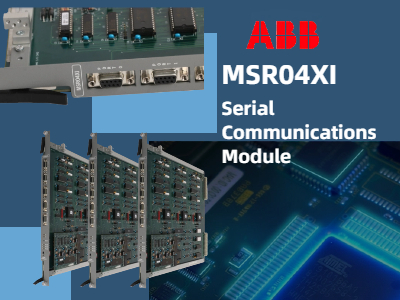
    Why the ABB MSR04XI Still Matters in an Era of Smart Factories?
    In today's era of smart factories and Industry 4.0 sweeping the globe, attention is often focused on IoT platforms, AI algorithms, or cloud-based big data analytics. However, in countless traditional industrial sites still operating stably—especially in heavy industries vital to national welfare such as power, chemical, and metallurgy—a stable and reliable DCS (Distributed Control System) remains the lifeline for production safety and efficiency. At the critical communication layer of these systems, the ABB MSR04XI serial communication module plays a silent yet indispensable "guardian" role. This article will delve into why this classic module remains crucial in the era of intelligent manufacturing. The "Nerve Endings" of DCS Systems: Understanding the Key Role of Serial Communication Modules The core idea of a DCS system is "distributed control, centralized management." Its hardware foundation—the field control stations (I/O stations)—needs to exchange data in real time with thousands of field instruments and actuators. In scenarios where Ethernet was not yet widespread or in harsh environments with long distances, stable and reliable serial communication (such as RS-485/RS-422) was once the only option. A Bridge Between Old and New: A "Critical Piece" in Smart Factory Transformation Building a smart factory doesn't always require a complete overhaul. For many companies, the most cost-effective path is "incremental upgrade": gradually embedding new data acquisition points or connecting to upper-level MES/ERP systems while retaining the existing reliable DCS core and numerous field instruments. This is where the value of the MSR04XI module becomes apparent. It can: Protect existing investments: Allowing companies to continue operating older smart devices or third-party subsystems without replacing them. Unparalleled Reliability: Survival in Harsh Environments The primary principle of DCS system design is high reliability and availability. Many industrial environments are harsh, presenting challenges such as strong electromagnetic interference, corrosive gases, and drastic temperature differences. While modern Ethernet devices are powerful, the complexity of their hardware and protocol stacks can sometimes become a weakness in extreme environments. Serial communication modules like the MSR04XI, specifically designed for industrial environments, offer the following advantages: Rugged Hardware: Utilizing industrial-grade components and design, it adapts to environments with wide temperature ranges, high humidity, and vibration. Simple and Stable Protocol: The serial protocol stack is simple, with mature underlying error handling mechanisms, high communication determinism, and resistance to network storms. Strong Electrical Isolation: Effectively isolates electrical interference between the field side and the system side, protecting expensive DCS core equipment. In critical process industries requiring 24/7 uninterrupted operation, this decades-prove...
  • How the ICS Triplex T8403 Digital Input Module Enhances DCS Reliability and Efficiency 08/12

    2025

    How the ICS Triplex T8403 Digital Input Module Enhances DCS Reliability and Efficiency
    Introduction to ICS Triplex T8403 Digital Input Module In today's industrial control environments, Distributed Control Systems require components that deliver both precision and operational consistency. The ICS Triplex T8403 Digital Input Module serves as a critical interface for industrial automation applications. With manufacturing systems growing increasingly complex, the availability of reliable DCS spare parts becomes vital for maintaining continuous operations. This module addresses these requirements through its well-engineered design, providing accurate signal acquisition and control capabilities across diverse industrial applications. Key Features of the ICS Triplex T8403 Digital Input Module The T8403 module demonstrates several engineering characteristics that support its use in industrial control applications. It accommodates 40 separate input channels, delivering comprehensive monitoring capacity for various digital signals. The module's 1-millisecond event detection capability ensures reliable capture of rapid state changes, a feature particularly valuable in processing industries and power generation facilities. Built for industrial deployment, the unit maintains operational stability between 0°C and 60°C during use and survives storage conditions from -25°C to 70°C. Its environmental specification includes reliable performance at humidity levels ranging from 10% to 95% without condensation, ensuring dependable service in challenging atmospheric conditions. Benefits of Using ICS Triplex T8403 in DCS Systems Implementation of the T8403 module within control system frameworks enhances both system reliability and operational visibility. The module supplies immediate digital input information, allowing early identification of process variations and supporting timely operational responses. This functionality contributes directly to improved system availability and production efficiency. The module's 40-input design supports expanding monitoring needs without requiring additional hardware investments. Its rapid response capability provides accurate event documentation, essential for process verification and operational analysis in quality-sensitive industries. These attributes establish the T8403 as a practical selection for maintaining control system performance. Why Choose ICS Triplex for DCS Spare Parts and Replacement Modules For operations requiring certified Distributed Control System replacement parts, ICS Triplex manufactures components recognized for their service life and performance consistency. The company's production methodology emphasizes component durability, decreasing replacement cycles and related maintenance costs. As a qualified DCS module supplier, ICS Triplex guarantees component interoperability with existing system designs, facilitating straightforward maintenance and system expansion projects. From scheduled maintenance activities to system enhancement projects, ICS Triplex provides components that help maintain...
  • Where Nature Meets Teamwork: An Evening Trek on Xiamen’s Mountain-Sea Health Trail 01/12

    2025

    Where Nature Meets Teamwork: An Evening Trek on Xiamen’s Mountain-Sea Health Trail
    A Trail Between Two Worlds As the city’s afternoon buzz began to soften, our team set off onto Xiamen’s remarkable Mountain-Sea Health Trail. This isn’t your average urban walkway; it’s an elevated masterpiece weaving through lush hills and offering glimpses of the serene sea. The trail’s genius lies in its design—a smooth, accessible path that floats above the treetops, connecting vibrant urban life with tranquil natural beauty seamlessly. Stepping onto the winding wooden boardwalk, the concrete jungle faded behind us, replaced by a green canopy and the fresh, salty breeze hinting at the ocean nearby. It felt like stepping into a different dimension, one perfectly positioned between earth and sky, city and nature, setting a magical stage for our shared adventure. Golden Hour and Shared Strides We timed our hike perfectly with the approaching evening. As the sun began its descent, a warm, golden light filtered through the leaves, painting the trail in long, dramatic shadows. The pace was relaxed, allowing for effortless conversation and shared laughter that echoed lightly in the open air. Without the challenges of rough terrain, the focus shifted entirely to companionship and the unfolding scenery. We walked in small, ever-changing groups, discussing everything from weekend plans to awe over the engineering of the trail itself. The effortless walk fostered a natural, unforced camaraderie, strengthening bonds with every shared observation and joke. The Spectacle of Sunset from the Skywalk The trail’s elevated sections provided front-row seats to one of nature’s finest daily performances. As we reached one of the broader viewing platforms, the sky transformed. The sun, a fiery orange orb, dipped towards the horizon, setting the clouds ablaze with shades of pink, purple, and gold. Below, the city and the sea started to twinkle with early lights. We paused as a group, a silent consensus forming to soak in this magnificent view. Cameras clicked, but mostly, people just watched, sharing quiet smiles. This collective moment of wonder—standing together high above the city, watching day turn to dusk—was the undeniable highlight of our trek. Nature’s Details and Playful Discoveries Beyond the grand vistas, the trail offered smaller, delightful discoveries. We noticed intricate spiderwebs glinting in the oblique light, listened to the evening chorus of birds settling in, and spotted colorful flowers clinging to the hillsides. The journey was punctuated with playful moments: spotting distant islands, trying to identify landmarks in the cityscape below, and even encountering friendly local walkers and their pets. The beautifully designed trail, with its gentle curves and occasional artistic installations, made every turn interesting. It was a reminder that adventure doesn’t require rugged climbs; it can be found in curiosity and shared observation. Twilight Return and Reflective Conversations As twilight deepened into a velvety blue, we began our return. The ...
  • How to Achieve the 20/12

    2025

    How to Achieve the "Impossible Triangle" in DCS Reliability? Honeywell Uses Layered Design to Balance Safety, Availability, and Efficiency.
    In the world of industrial automation, the Distributed Control System (DCS) is the central nervous system of modern factories, responsible for control, monitoring, management, and decision-making. Its reliability is directly tied to plant safety and economic performance. Engineers have long faced a daunting "impossible triangle": simultaneously achieving ultimate safety, continuous high availability, and optimal operational efficiency. Through its Experion® platform and advanced design philosophy, Honeywell demonstrates how to turn this trilemma into a balanced, achievable reality. The Foundation - Building an Inherently Fault-Resistant System The first line of defense is to prevent faults from occurring. Honeywell's reliability journey begins with robustness by design. This involves using high-quality, industrial-grade components rigorously tested for extreme conditions, alongside simplified system architecture that reduces complexity—a primary source of failure. The software foundation is built with certified, secure, and deterministic code, minimizing vulnerabilities. This approach embodies the principle of "fault prevention," ensuring the DCS itself is inherently resilient, forming the solid cornerstone of the reliability triangle. The Safety Net - Containing Faults and Minimizing Impact When a fault does occur, the system must limit its consequences. Honeywell implements "fault security" and "fault weakening" strategies. This includes comprehensive hardware and software diagnostics that run continuously to detect anomalies early. Critical controllers feature built-in self-diagnostics and watchdog timers. Should a severe fault be detected, the system executes predetermined safe-state actions, such as moving to a known safe operating mode or initiating an orderly shutdown, thereby protecting personnel, equipment, and the environment. This layer ensures that safety is never compromised, addressing the most critical vertex of the triangle. The Core Strategy - Ensuring Uninterrupted Operation with Fault Tolerance To guarantee continuous production, the system must tolerate faults and keep running. Honeywell achieves this through comprehensive "fault tolerance" designs. Key components like controllers, power supplies, and network pathways are fully redundant in a hot-standby configuration. The famous "1:1 redundancy" and "N+1 redundancy" architectures ensure seamless automatic switchover without process interruption in case of a primary element failure. This high-availability design is crucial for maintaining operational uptime and economic efficiency, directly supporting the "availability" and "efficiency" vertices of the triangle. The Evolution - Enabling Maintenance Without Downtime The pursuit of reliability extends to system maintainability. Honeywell's online maintenance capability allows engineers to repair, replace, or upgrade hardware components and even perform software updates without stopping the production process. This is possibl...
  • Who’s Behind the Smart Factory Revolution? Bently HOST’s Role in Industry 4.0 08/12

    2025

    Who’s Behind the Smart Factory Revolution? Bently HOST’s Role in Industry 4.0
    The Hidden Engine of Industry 4.0: Beyond Automation When we talk about the smart factory revolution, visions of robotics and AI often take center stage. However, the true backbone of Industry 4.0 is reliable, actionable data from the physical assets themselves. Without a deep understanding of machine health, automation is built on shaky ground. This is where the silent revolution happens: in the realm of predictive intelligence that prevents catastrophic failure and ensures seamless production. Enter Bently HOST, a solution built not just on technology, but on six decades of machinery expertise, proving that the smart factory’s most crucial partner is the one that keeps its heart—the rotating equipment—beating reliably. More Than Monitoring: A Full-Spectrum Strategy for Asset Health Bently HOST is not merely a tool; it’s a comprehensive, outsourced strategy for enterprise-wide asset protection. It solves the most evident challenge—acquiring accurate, machine-saving data—by connecting your critical equipment to Bently Nevada’s award-winning System 1 software and hardware. But the data is just the beginning. The second, less obvious problem it solves is the prohibitive cost and complexity of building an in-house condition monitoring empire. Bently HOST eliminates this burden by providing a complete, managed service: from the infrastructure and software to the expert personnel who monitor your assets 24/7 from secure Remote Monitoring and Diagnostics Centers. It’s a turnkey path to world-class predictive maintenance. The Three-Pillar Advantage: Infrastructure, Software, Expertise How does Bently HOST deliver this comprehensive protection while reducing cost? The answer lies in its three core pillars: Infrastructure-as-a-Service: Forget capital expenditure on servers, networks, and storage. Bently HOST provides shared, cutting-edge computing resources managed and maintained entirely for you, removing hardware headaches and upgrade cycles. Software-as-a-Service: You gain the full power of Bently Nevada’s industry-leading System 1 platform—licensed, delivered, and managed through the HOST service, with no large upfront software investment. Expertise-as-a-Service: This is the differentiator. While others offer IaaS or SaaS, none provide the 60+ years of applied machinery knowledge that Bently Nevada does. Your data is analyzed by global specialists, instantly granting your team centuries of collective diagnostic experience, either as a primary solution or a powerful backup. From Cost Center to Profit Protector: The Economic Impac The financial logic of Bently HOST is compelling. It transforms condition monitoring from a capital-intensive project into a scalable operating expense. By eliminating upfront costs in infrastructure and software, and by removing the need to recruit, train, and retain a high-level internal monitoring team, Bently HOST delivers a complete enterprise asset health program for a fraction of the traditional cost. This direct saving...
  • Which Industrial Automation Spare Parts Are Critical for Preventing Downtime 05/12

    2025

    Which Industrial Automation Spare Parts Are Critical for Preventing Downtime
    Introduction: The Importance of Reliable Industrial Automation Spare Parts In today's industrial operations, reducing equipment stoppages is crucial for maintaining production output and financial performance. Automated control systems serve as the fundamental framework for contemporary manufacturing, yet they remain prone to performance degradation that can cause unexpected production halts without adequate maintenance protocols. Access to proper replacement components is vital for sustaining continuous system functionality and preventing expensive operational delays. This discussion will identify the most critical industrial automation parts for ensuring system reliability, with particular emphasis on TSI spare parts, Turbine Supervisory Instrumentation components, and TSI modules. Why TSI Spare Parts Are Essential for Preventing Downtime Turbine Supervisory Instrumentation (TSI) installations are critical in energy generation plants, processing facilities, and other industrial settings where turbine performance directly affects operational continuity. These monitoring configurations oversee and manage turbine functions to ensure both optimal performance and safety compliance. Given their strategic importance, employing premium TSI spare parts becomes fundamental for preventing sudden malfunctions that could generate substantial production losses. The range of TSI spare parts encompasses monitoring detectors, processing units, and electrical distribution elements, all constructed to survive challenging industrial circumstances including thermal extremes, mechanical oscillations, and environmental contaminants. Maintaining strategic reserves of these crucial components allows operations to immediately replace failing parts without experiencing lengthy supply chain delays, thus preserving optimal system performance. Acquiring genuine TSI spare parts not only assists in avoiding production interruptions but also prolongs turbine system operational life, consequently decreasing long-term service and repair costs. Key Components of Turbine Supervisory Instrumentation (TSI) Systems Turbine Supervisory Instrumentation arrangements employ numerous interconnected elements to deliver accurate monitoring and regulation of turbine performance. Essential Turbine Supervisory Instrumentation components comprise measurement instruments that track oscillation characteristics, thermal changes, force variations, and other crucial operating indicators. These detection devices demand systematic maintenance and eventual substitution as they undergo progressive performance deterioration, since minor measurement discrepancies can potentially create significant turbine impairment. The TSI modules constitute another vital aspect, serving as the central computing components that analyze detector information and execute turbine regulation instructions. These processing units maintain efficient turbine functioning while allowing instant detection and resolution of operatio...
  • How GE is Transforming Factory Floors with AI and Robotics: The Future of Industrial Automation 28/11

    2025

    How GE is Transforming Factory Floors with AI and Robotics: The Future of Industrial Automation
    The Power of AI and Robotics in Modern Manufacturing GE is pioneering a new era in industrial automation by combining artificial intelligence with advanced robotics systems. These innovations are turning conventional production facilities into interconnected smart environments that demonstrate unprecedented operational efficiency. Manufacturers implementing these technologies can optimize their workflow processes, achieve superior precision levels, and dramatically reduce production interruptions. The deployment of AI-enhanced robotic systems enables personnel to focus on strategic planning while automated equipment manages repetitive or high-risk operations. Robotic technology proves particularly valuable in performing intricate assembly, packaging, and quality assurance functions with exceptional velocity and uniformity, delivering manufacturers crucial marketplace advantages in today's competitive industrial landscape. Industrial Automation: A Game-Changer for Spare Parts Management Contemporary spare parts management has undergone dramatic transformation through GE's automated platforms that employ artificial intelligence to forecast component replacement needs. This forward-looking maintenance approach enables industrial operations to avoid unexpected machinery failures while maintaining ideal inventory quantities. Using networked monitoring systems and sophisticated data processing, GE's solutions observe equipment performance continuously, producing automatic notifications when parts near their operational limits. This facilitates scheduled acquisition of industrial spare parts before production disruptions can occur, substantially decreasing manufacturing delays and urgent repair costs while ensuring continuous production activities and improved inventory management. The Role of Industrial Automation Parts in GE's Ecosystem Within GE's automation network, industrial automation parts serve as critical elements that guarantee manufacturing procedures run smoothly and effectively. The corporation's extensive product range incorporates accurate sensors, high-performance actuators, advanced controllers, and automated robotic units that cooperate to sustain uninterrupted production cycles. These components are engineered to provide outstanding reliability and longevity under challenging industrial circumstances, while their interoperability with current systems streamlines implementation procedures. Companies that integrate GE's industrial automation parts experience reduced equipment malfunction incidents, prolonged operational availability, and more flexible manufacturing systems that can adjust to evolving production demands. How GE's Robotics Solutions Are Revolutionizing Factory Operations GE's robotic systems are fundamentally reshaping manufacturing plants through the deployment of intelligent automation technologies. Robotic manipulation arms and autonomous transport units work in coordination to enhance manufacturing adaptability and o...
If you are interested in our products and want to know more details,please leave a message here,we will reply you as soon as we can.

Mon 11/21 - Wed 11/23: 9 AM - 8 PM
Thu 11/24: closed - Happy Thanksgiving!
Fri 11/25: 8 AM - 10 PM
Sat 11/26 - Sun 11/27: 10 AM - 9 PM
(all hours are Eastern Time)
:+86 18030235313

Ana sayfa

Ürünler

whatsApp

Contact Us